The corpus
The COLET experiment
COLET is a 47-person eye-tracking corpus recorded in Heraklion and released by Ktistakis and colleagues in 2022. One visual-search task, four conditions, one rating per condition per person: 188 labeled rows, and that is everything the poster measures.
One task, four conditions
Every condition showed five screens drawn at random from the same pool of 21. The picture never set the difficulty; the instruction and the counting did.
Each RTLX rating covered a block of five screens, so no single picture has a rating of its own. One rating per condition per person gives 47 × 4 = 188 labeled rows. The means are from the released corpus (data_v3, March 2023); the paper's Table 2, from an earlier cut, reports 19.4, 29.2, 44.8, 52.2, within half a point. In the authors' own analysis the counting task moved 17 eye features and time pressure moved 7.
Screens: COLET, Ktistakis et al. 2022, Computer Methods and Programs in Biomedicine; Zenodo 7766785, CC BY 4.0. Photographs: Quattoni and Torralba 2009, MIT Indoor Scenes. The COLET authors added the grid and the instructions.
The screen
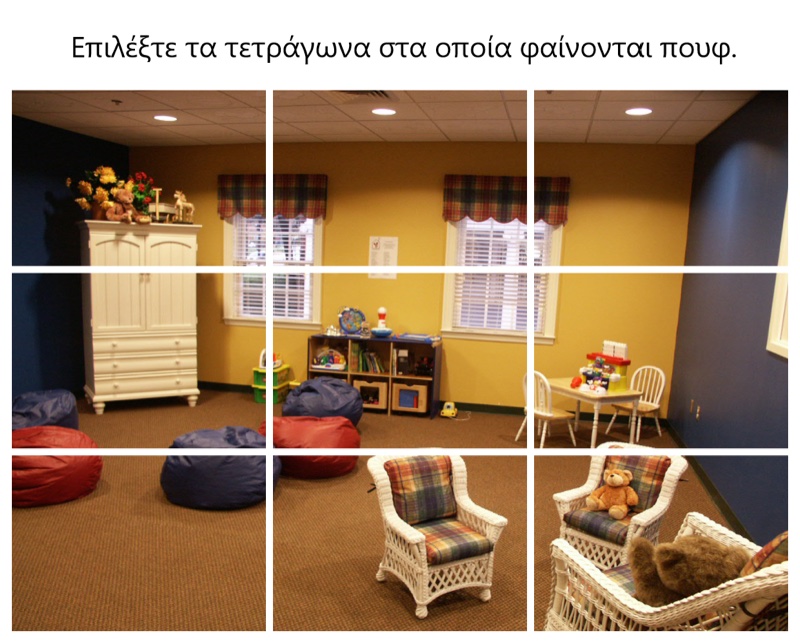
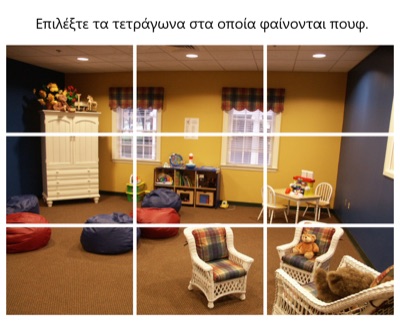
“Επιλέξτε τα τετράγωνα στα οποία φαίνονται πουφ.”
“Select the squares in which pouffes are visible.” The participants were Greek speakers; the instruction stays in Greek on the screen, as it was shown.
This is the screen the paper uses as its own example and the one the poster's companion shows. The target object is in each file name; the grid is the authors'; the photographs come from the MIT Indoor Scenes set.
The recording
- Eye tracker
- Pupil Labs Pupil Core, binocular, 240 Hz, worn on the head.
- Display
- A 24-inch screen at 1280 × 720, 80 cm from the eyes.
- Head
- A chin and head rest, so the world-camera frame is stable within a participant.
- Room
- Photopic: 400 lux at the cornea with the screen off, 450 with a blank screen.
- Pupil and brightness
- The authors regressed each participant's mean pupil diameter on image brightness. Only 2 of 47 showed a correlation, so raw pupil diameter can be read as load on these screens.
- The task
- Twenty-one indoor photographs, each cut into a 3 by 3 grid under an instruction naming an object. Choose the squares that contain it.
- Order
- Five screens per condition, drawn at random from the pool of 21. The four conditions ran in random order, each once, with a two-minute break between.
- Labels
- NASA RTLX after each block of five: the unweighted mean of six subscales rated 0 to 100. One rating per condition per person.
- Participants
- 47, each screened for visual acuity. 47 × 4 = 188 labeled rows.
Why no gaze is drawn over a picture
The corpus ships gaze in the eye tracker's world-camera frame (norm_pos_x, norm_pos_y), with no mapping to the screen. Placing participant 5's trace on a puzzle would be a reconstruction, and nothing on the poster or on this site is reconstructed. The replay stays on its own pane, and the two panes are comparable to each other because the chin rest kept the frame stable within a participant.
The corpus also does not log which five screens each block showed, so the pool below is all that can be shown, and no screen carries a load rating of its own.
All 21 screens
The full stimulus pool at thumbnail size, numbered as in the corpus readme. Each condition block drew five at random from it.
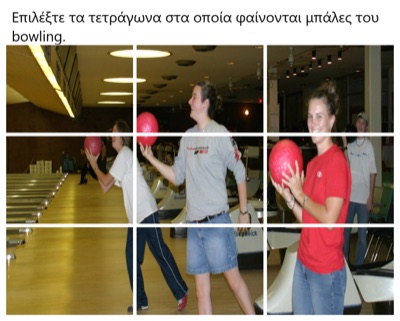
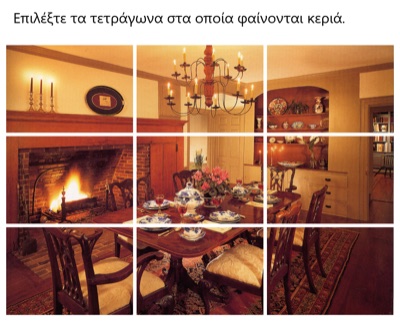
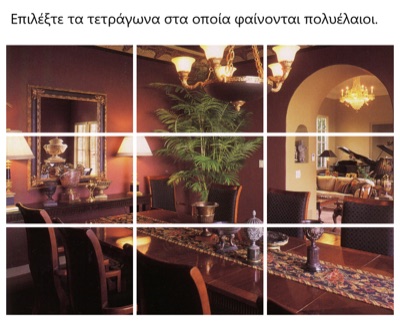
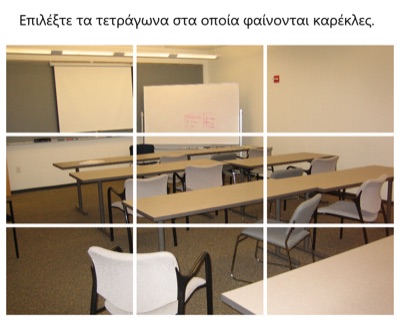
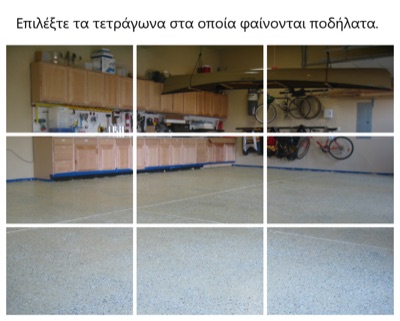
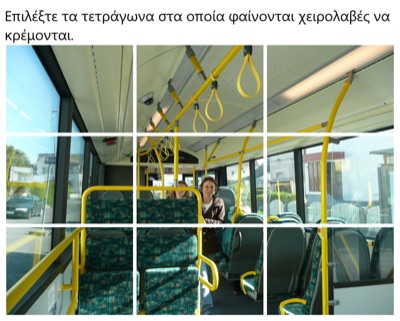
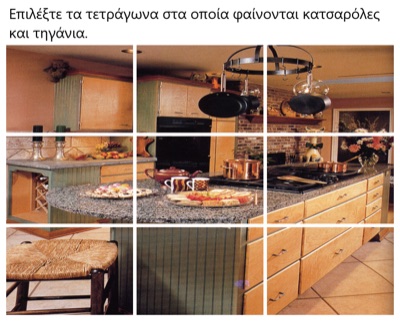
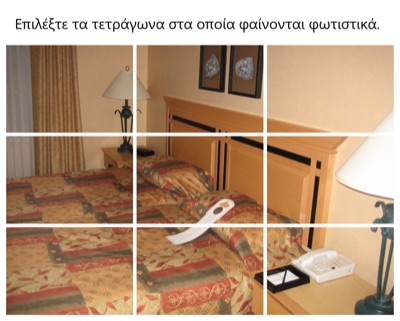
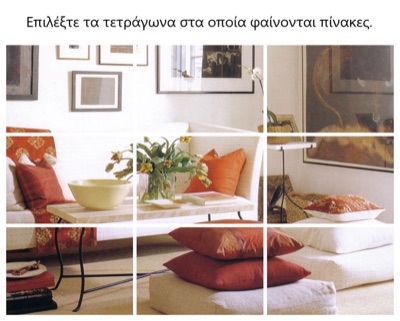
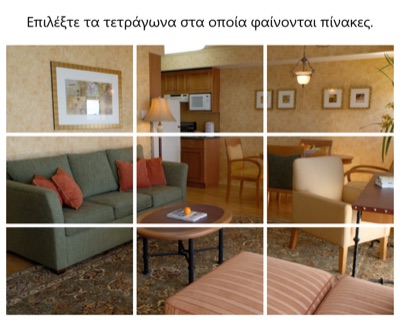
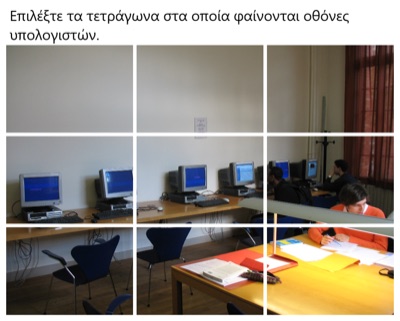
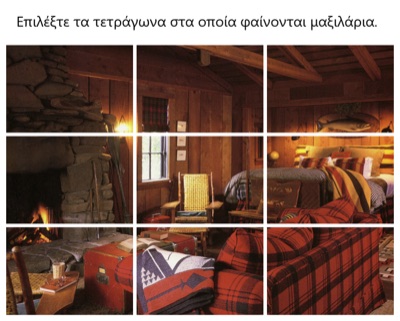
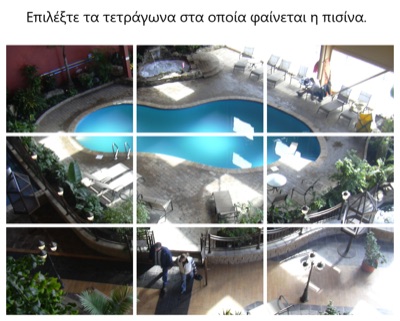
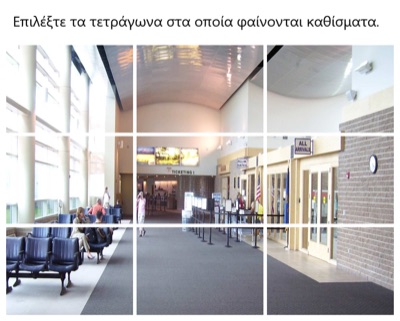
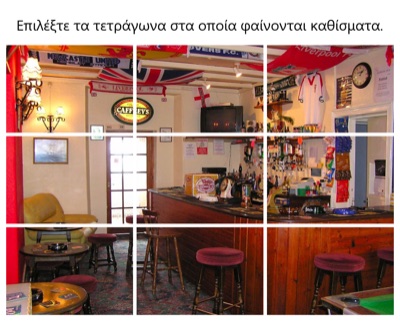
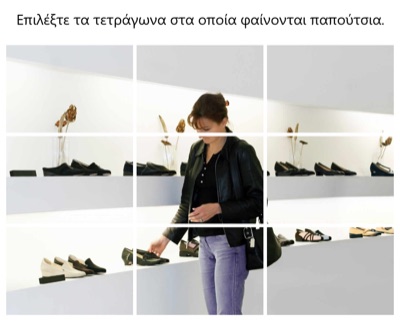
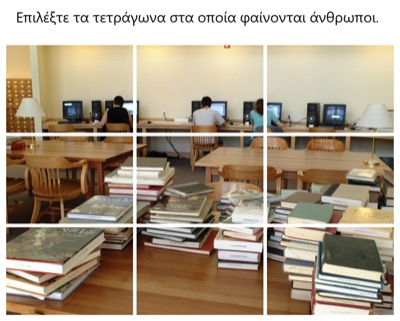
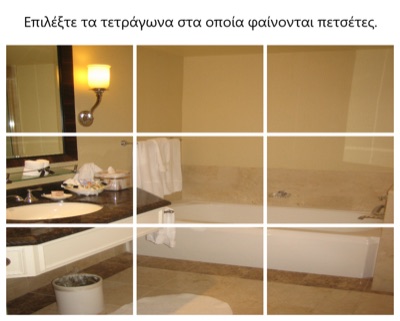
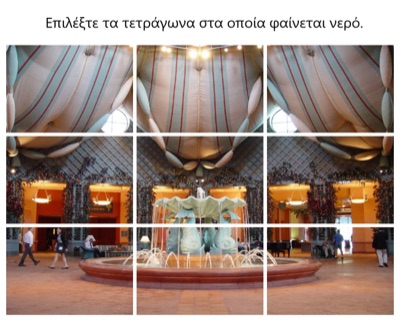
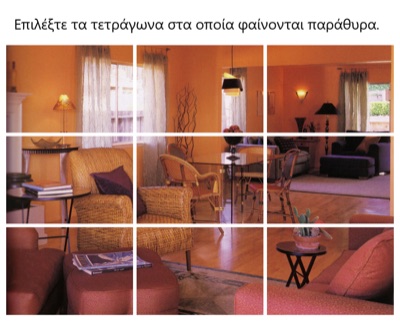
Screens: COLET, Ktistakis et al. 2022, Computer Methods and Programs in Biomedicine; Zenodo 7766785, CC BY 4.0. Photographs: Quattoni and Torralba 2009, MIT Indoor Scenes. The COLET authors added the grid and the instructions.
Sources
- The corpus: Zenodo record 7766785, CC BY 4.0.
- The paper: Ktistakis E, Skaramagkas V, Manousos D, Tachos NS, Tripoliti E, Fotiadis DI, Tsiknakis M. COLET: A dataset for COgnitive workLoad estimation based on eye-tracking. Comput Methods Programs Biomed. 2022;224:106989. doi:10.1016/j.cmpb.2022.106989
- The photographs: Quattoni A, Torralba A. Recognizing indoor scenes. CVPR 2009. MIT Indoor Scenes.
What this site uses from COLET: the per-task feature table computed from the recordings, participant 5's two thirty-second gaze windows, and these screens at thumbnail size.